Simulation d'un Parc Informatique avec IPv6 et GNS3
Advanced network simulation using IPv6 addressing and GNS3 for practical implementation of a computer network.
Explore Features




Project Overview
This project demonstrates the simulation of a fully operational computer network using IPv6 addresses in GNS3. The simulation includes designing, configuring, and troubleshooting network devices such as routers, switches, and hosts. The goal is to understand the implementation and transition from IPv4 to IPv6 addressing in a practical environment.
- Designed a logical and physical network topology in GNS3.
- Implemented IPv6 addressing for all devices in the network.
- Configured and tested connectivity between hosts and routers.
- Troubleshot issues related to IPv6 routing and address allocation.
Key Features
- IPv6 Addressing: Assigned and configured IPv6 addresses for all devices in the network.
- Dynamic Routing: Implemented dynamic routing protocols such as OSPFv3 for efficient network communication.
- Simulation Environment: Used GNS3 to create and test the network in a virtualized environment.
- Transition Mechanisms: Simulated dual-stack and tunneling techniques to enable IPv4-IPv6 interoperability.
- Network Testing: Verified connectivity using tools like ping, traceroute, and packet captures.
Gallery
Take a look at some key moments from the network simulation:
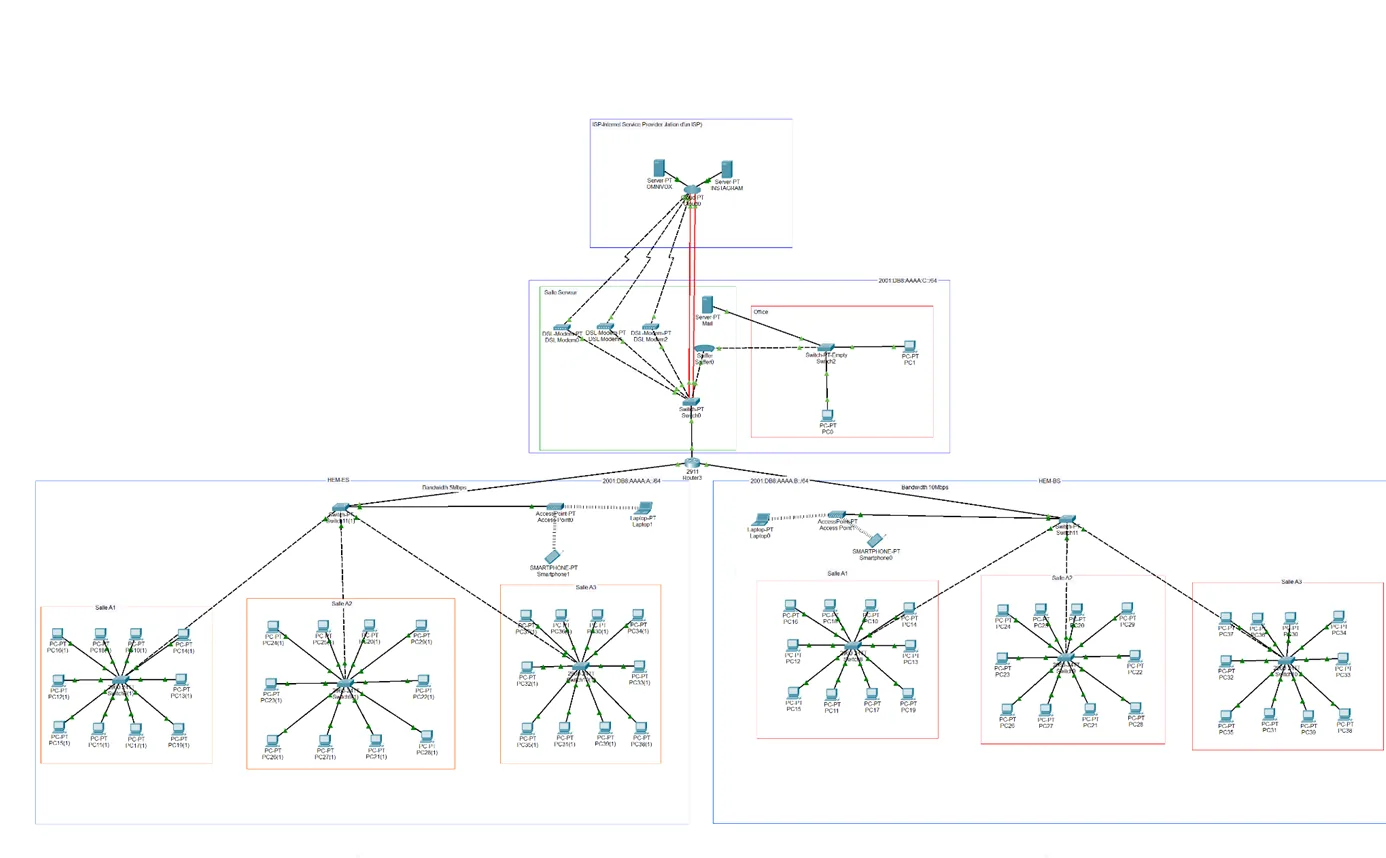
Network topology
 View on GitHub